OVERDOSE EMERGENCY HEALTHCARE VISITS: STATEWIDE AND jACKSON COUNTY
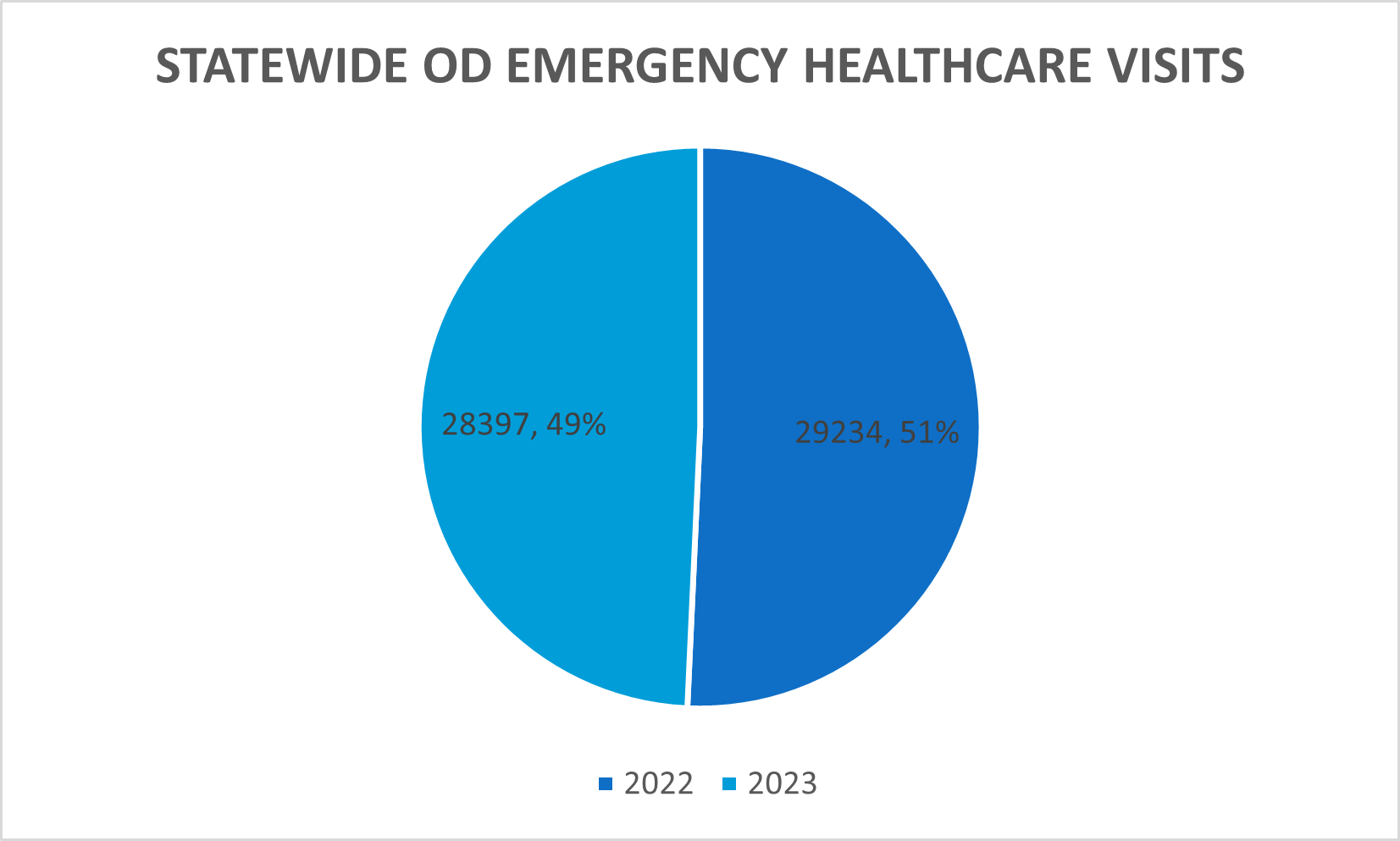
When we consider overdose emergency healthcare visits for the state, we can see that there has not been a significant change in the number of people seeking emergency department care from 2022 to 2023. That said that the number of overdose deaths could be due to efforts all around the state to provide easy access to Narcan in public settings as well as in vending boxes.
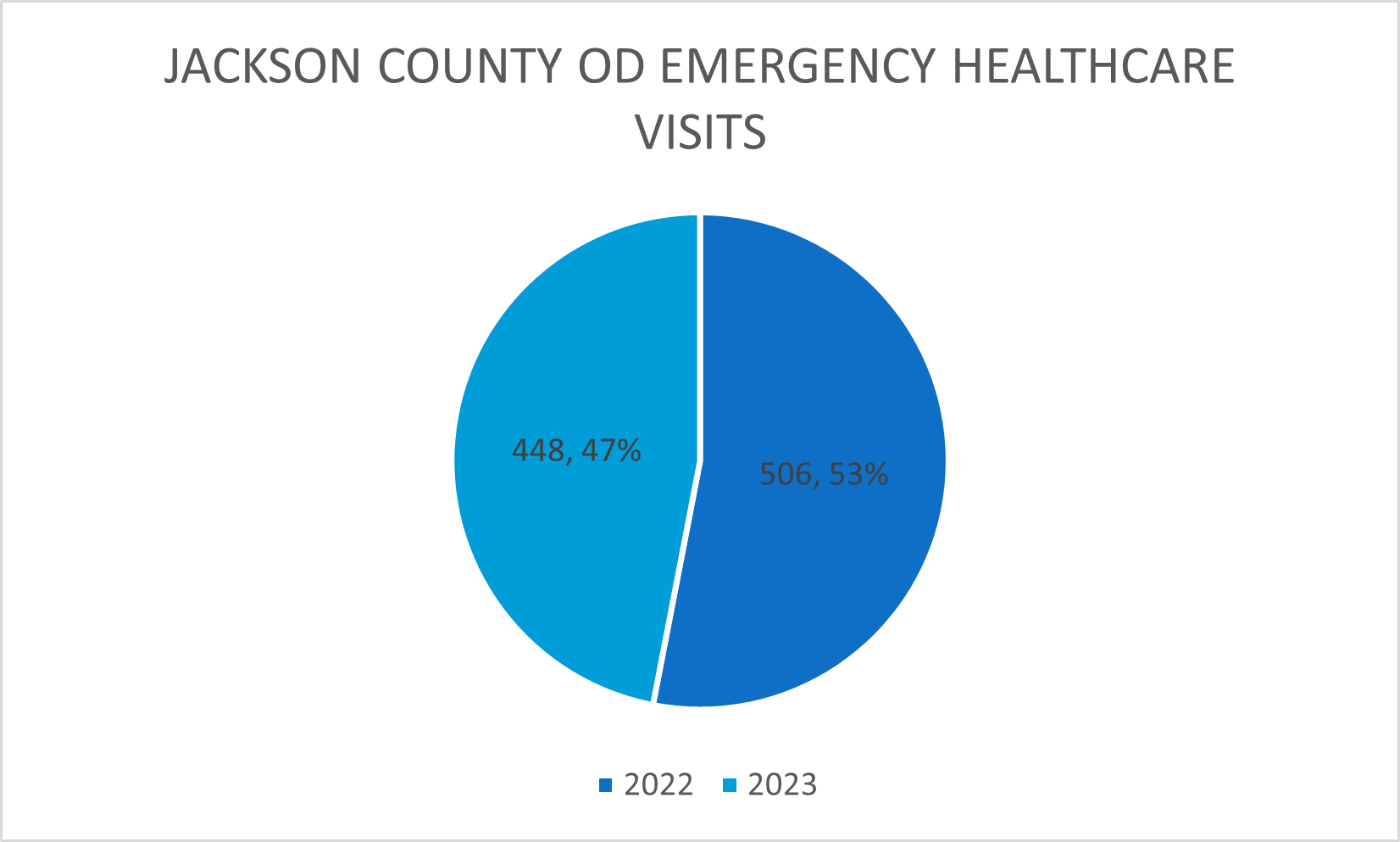
In Jackson County, overdose emergency healthcare visits did increase from 2022 to 2023. Some factors that could contribute this increase is that first responders or using Narcan more often on the scene; that Narcan is more readily available through harm reduction approaches and access in social service agencies, local libraries, the sheriffs’ department, and in vending machines around the county. Efforts to reduce the stigma of substance misuse in print, on billboards, webpages, social media, and public presentations has functioned to normalize the life-saving effects of Narcan.
Source: MODA Data Dashboard
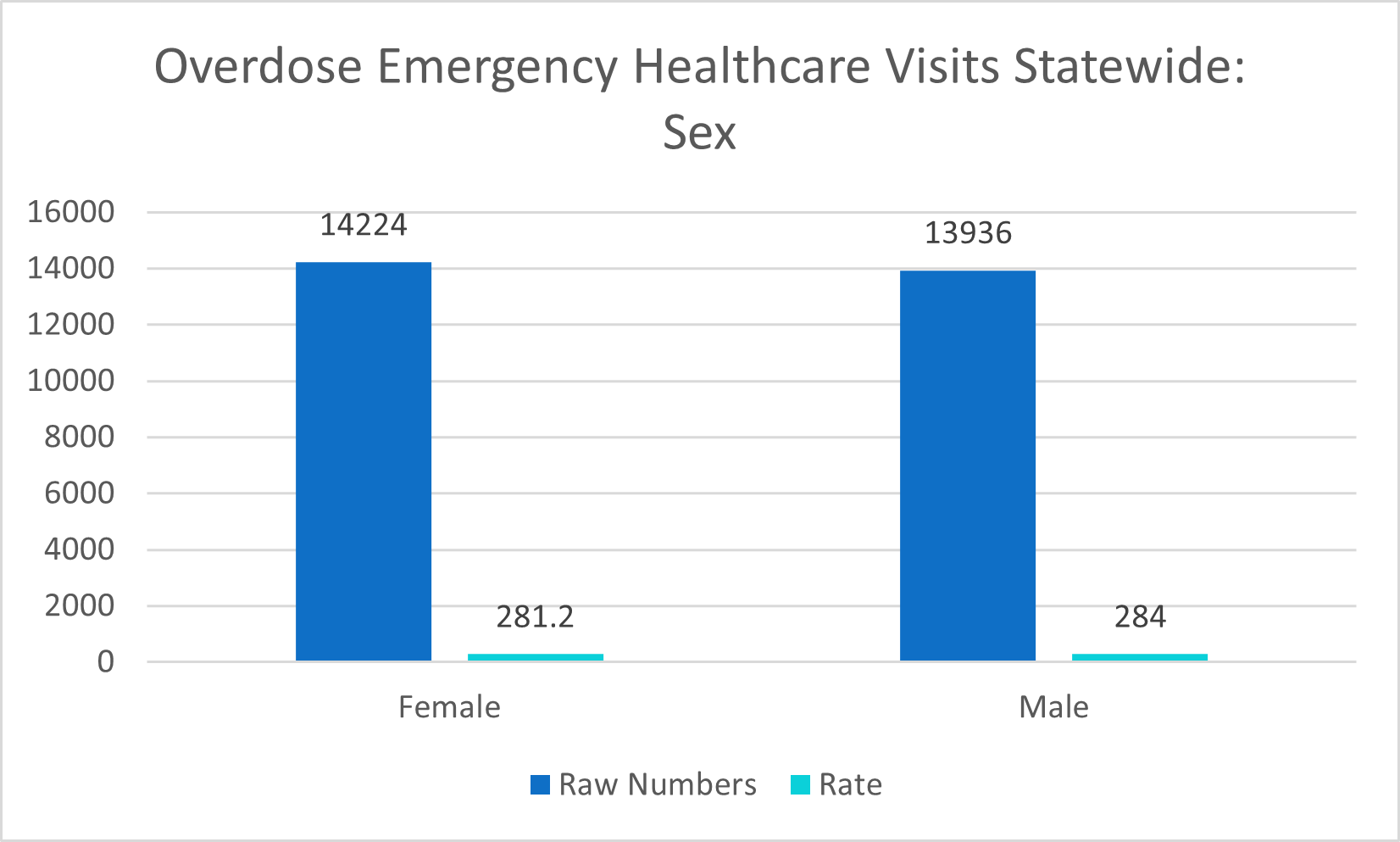
Statewide there is not a significant difference between female and male emergency healthcare visits in 2023
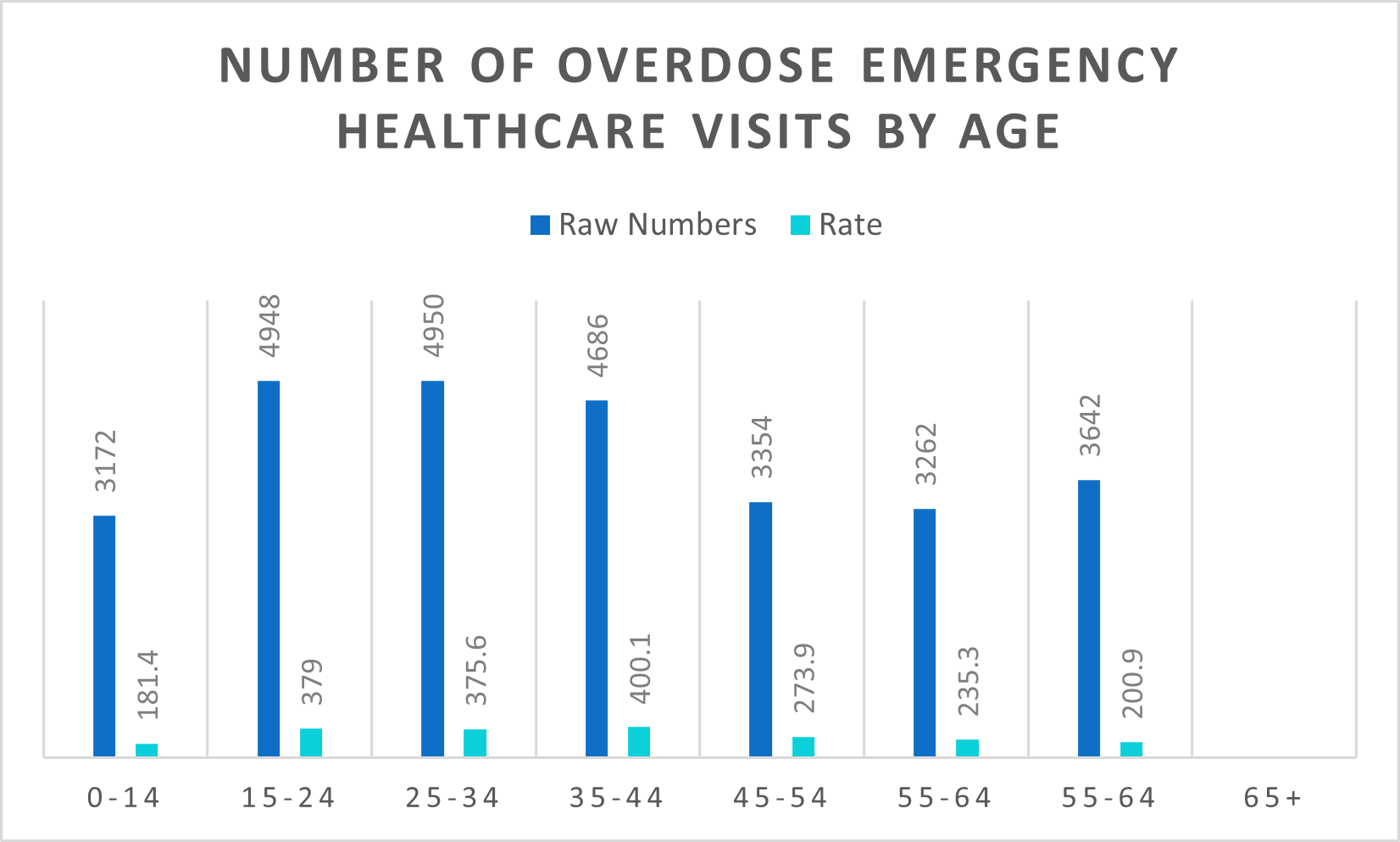
Statewide, the age for those who most access overdose care in the emergency department is 15 -44 years old in 2023.
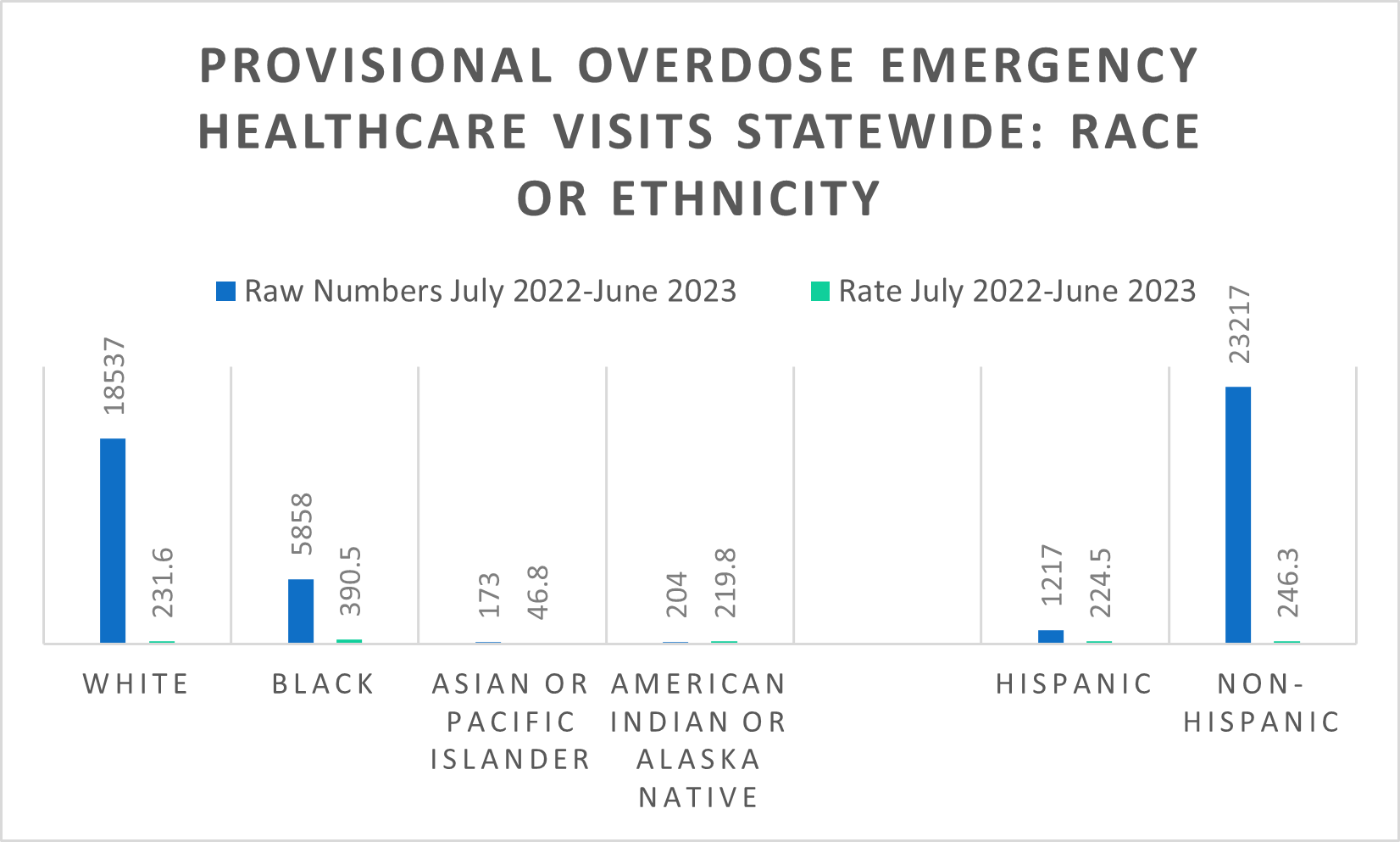
In the state of Michigan, those who seek emergency medical care are primarily White and Black. As noticed above in regard to overdose death, the raw numbers indicate that more White individuals seek emergency care more than Black individuals, but when you compare the per 100,000 rates for accessing emergency care, proportionally, Black individuals use emergency medical care at a higher rate than White individuals despite the lower raw numbers.
Source: MODA Data Dashboard
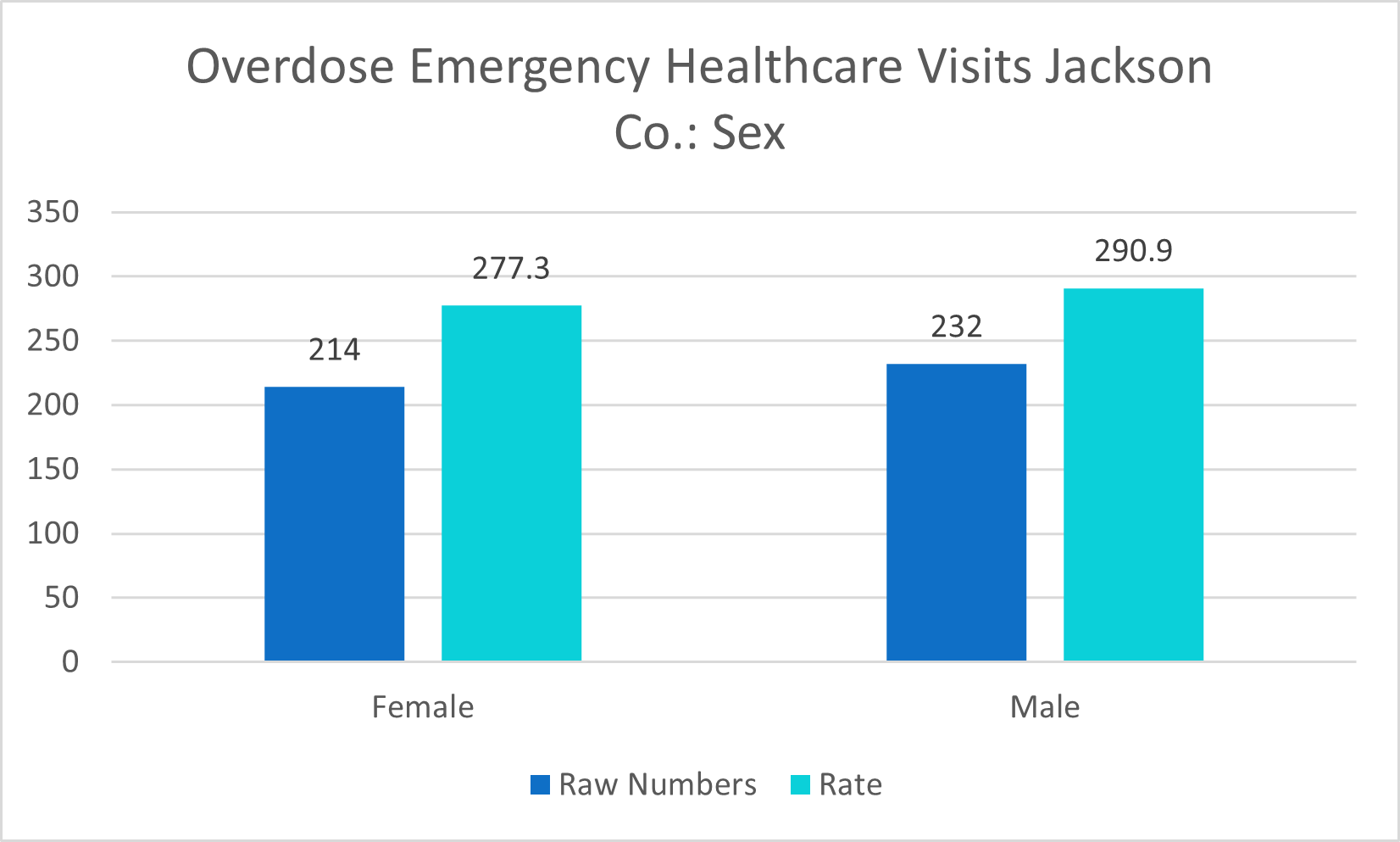
However, in Jackson County, male visits to emergency healthcare visits are slightly higher in 2023 .
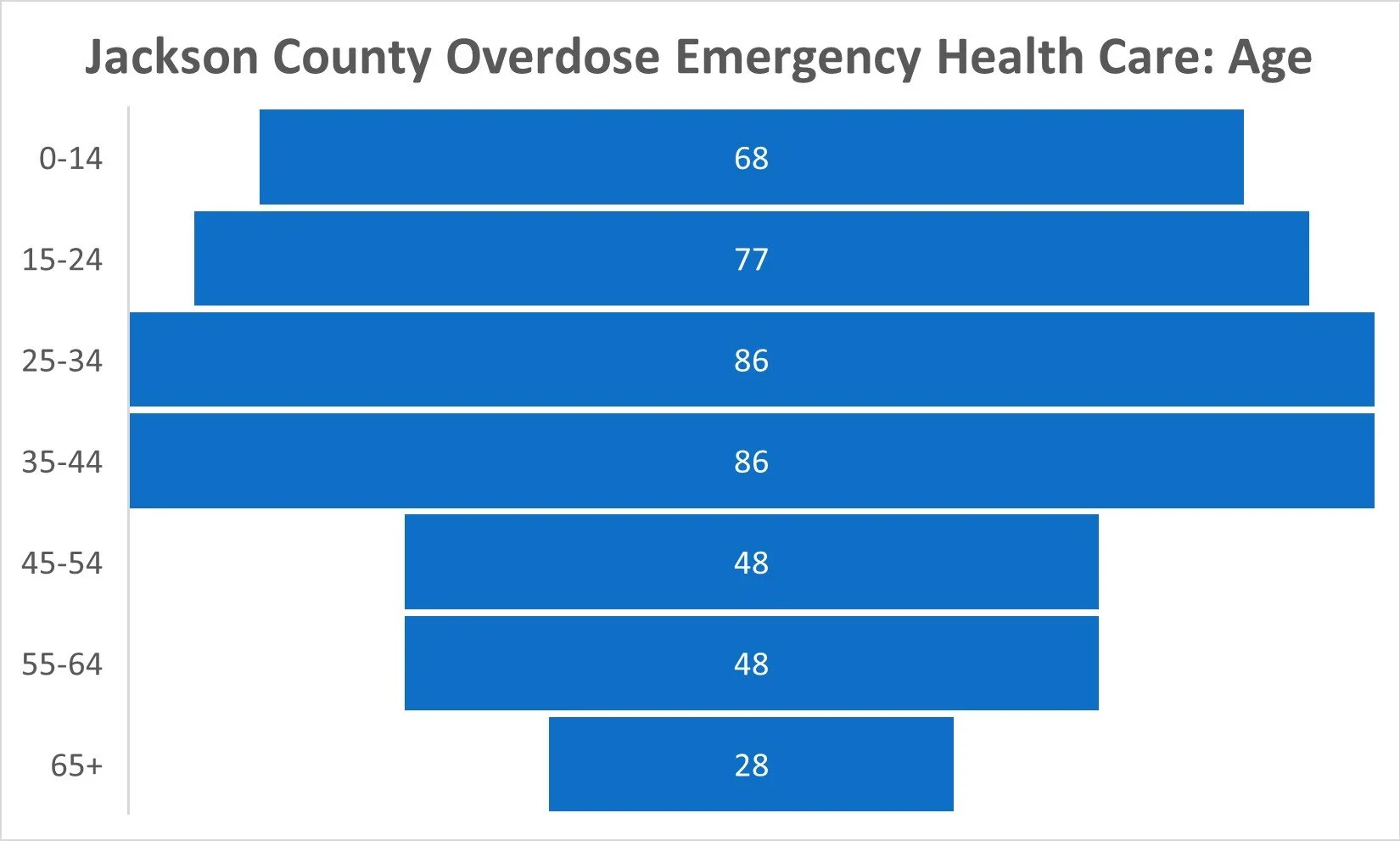
Jackson County exhibits the same age range from 15 - 44 years old in 2023.
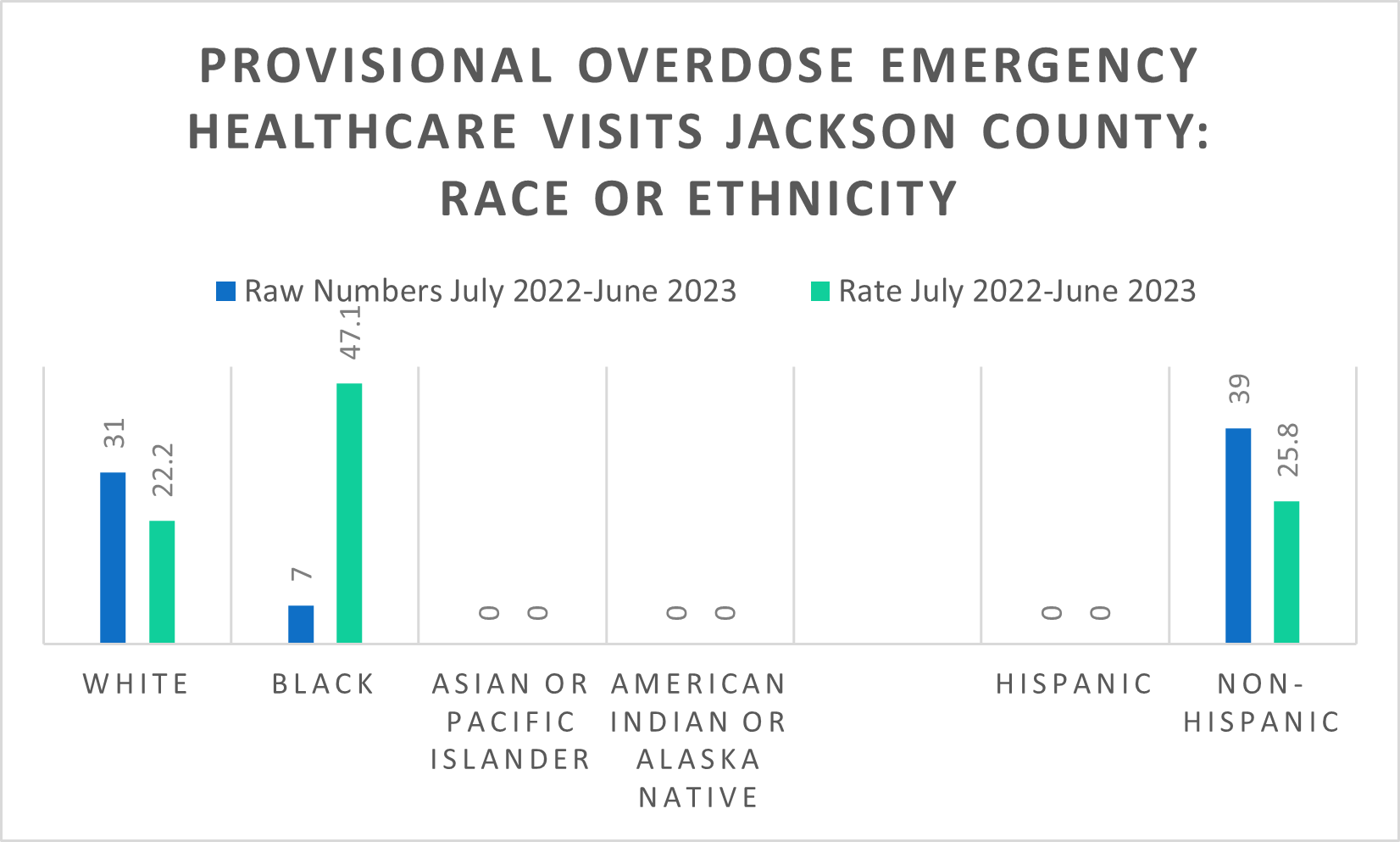
Jackson County, the data is very much the same as the statewide data. White individuals still seek emergency care more than Black individuals, but the per 100,000 rate is much higher for Black individuals,